More Is Now – New Czech Architecture
3 min read
New Czech architecture
The exhibition has been organised to mark the Czech Republic’s appearance as Guest of Honour at the Frankfurt Book Fair. It takes this opportunity to introduce the German public to the work of predominantly younger architects. Around 30 award-winning buildings are on display, curated by Helena Huber-Doudová of the National Gallery in Prague.

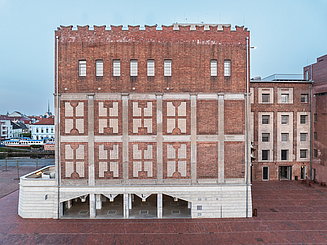


What is particularly fascinating is the geographical selection: most of the projects on display are not in Prague, but in the wider region. In this way, the exhibition deliberately draws attention to a Czech Republic beyond the capital – to places whose architectural development has so far been largely overlooked in German-speaking countries.
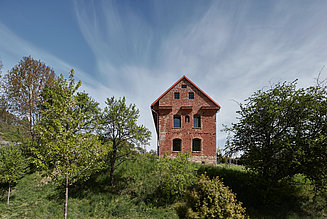
Architecture reimagined
And that is precisely what makes the exhibition so interesting for planners and those with an interest in architecture. It shows how a young generation of architects is coming to terms with a rather weighty modernist legacy without constantly drawing on it.
It also makes it clear that architectural quality is not confined to major cities – an idea that ties in well with the urban-rural debate in Germany. And it offers a rare opportunity to see current Czech building projects in direct comparison, rather than merely being familiar with them in isolation from specialist publications.
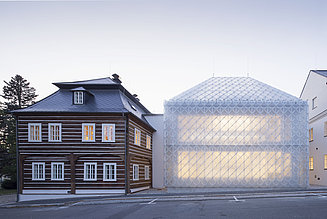
The Legacy of Modernism
The reference to Villa Tugendhat is not a chance curatorial allusion, but a deliberately established framework: the house, which Mies van der Rohe and Lilly Reich designed in their forties, represents a moment when international modernism and the local context converged in Brno – with a result that continues to have an impact to this day. The exhibition implicitly raises the question of whether a similar relationship between global influences and regional roots can be found in Czech architecture today.

What: ‘More Is Now – New Czech Architecture’ exhibition
When: 19 September 2026 – 17 January 2027
Where: DAM Frankfurt (German Architecture Museum)


