Four cities that are rethinking architecture
4 min read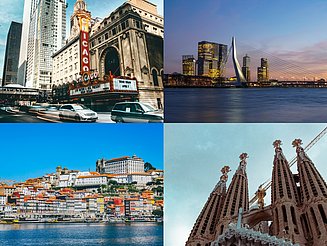
Chicago: the birth of the skyscraper city
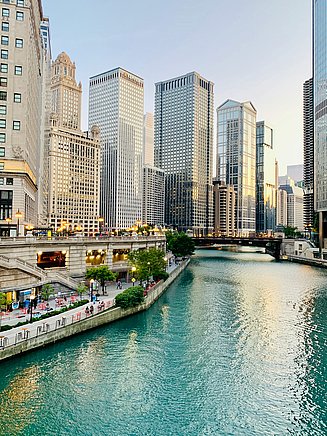
Hardly any other place is as closely associated with the invention of the modern skyscraper as Chicago. Following the Great Chicago Fire of 1871, and aided by new steel structures and the invention of the lift, what would later be known as the Chicago School emerged here: clear façade grids, structural honesty, and the rejection of historicist ornamentation.
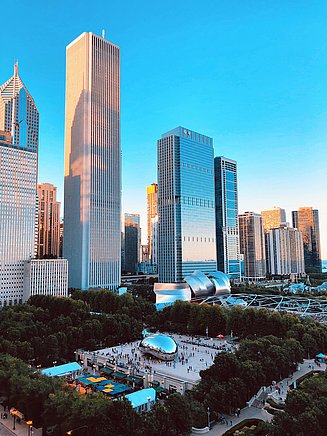
With his famous maxim ‘form follows function’, Louis Sullivan articulated a principle that was to shape 20th-century architecture far beyond Chicago. Decades later, Ludwig Mies van der Rohe – who, as director of the Illinois Institute of Technology, played a key role in training a new generation of architects – made his own, radically minimalist mark with buildings such as the Lake Shore Drive Apartments.
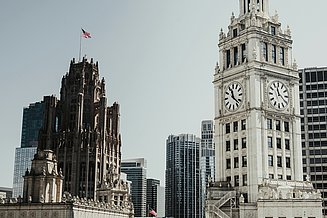
Between these two positions lies an entire lineage of modernist development, which can be clearly and comprehensively traced in Chicago. Anyone viewing the skyline from the Chicago River or taking the architectural boat tour can literally see a timeline of skyscraper construction, from the early steel-frame structures to later icons such as the Willis Tower.
Rotterdam: a city as an ongoing experiment
In the second half of the 20th century, Rotterdam consistently opted for modern, forward-looking urban development rather than reconstructing the cityscapes of the past. This approach continues to have an impact today: Rotterdam is regarded as one of Europe’s most innovative cities in terms of architecture.
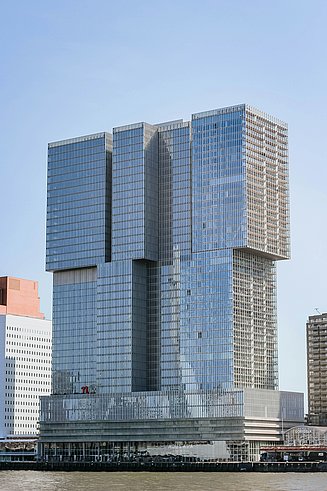
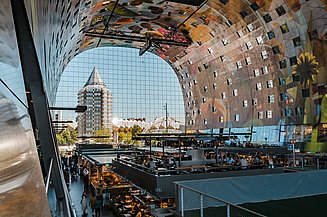
It was here that Rem Koolhaas founded OMA, a practice that has had a decisive influence on international architectural debates, and MVRDV, known for buildings such as the Markthal, is also based in the city. Rotterdam is characterised by its openness to unusual architectural typologies: stacked cube-shaped buildings, elevated bridge structures such as the Erasmus Bridge, and high-rise buildings situated in close proximity to port facilities.
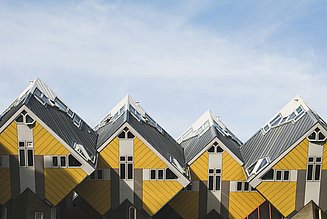
For architects, therefore, the city is less a collection of individual masterpieces than an ongoing testing ground for exploring how living, working and public space can be redefined in a city without long-term architectural continuity.
Porto: Craftsmanship and Restraint
Porto embodies a different tradition: an architectural style that evolves from the topography, the light and the local materials, rather than asserting itself through striking forms. The so-called Escola do Porto, shaped by architects such as Álvaro Siza and Eduardo Souto de Moura – both Pritzker Prize laureates – is characterised by a minimalist, context-sensitive design language.
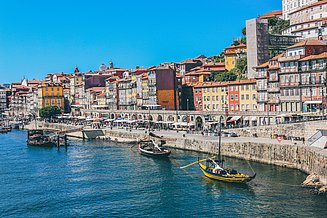
Siza’s buildings, such as the Faculty of Architecture at the University of Porto or the Igreja de Santa Maria in Marco de Canavezes, explore place, light and function with great precision, without resorting to mere grand gestures.
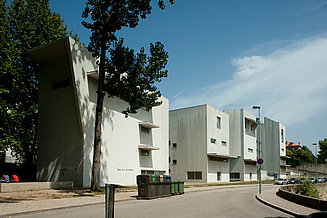
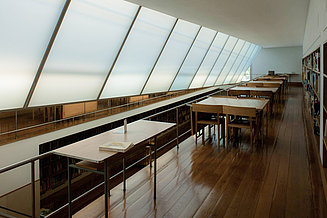
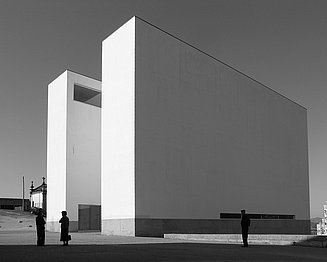
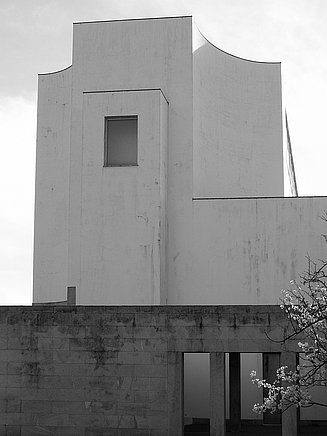
Souto de Moura carries this approach forward in his projects, for example in his sensitive treatment of existing buildings and the landscape. For architects, Porto therefore represents an alternative to the iconic, grand gesture: a case study in precision on a small scale, in the art of creating spatial quality with limited resources, and in an approach to materials and craftsmanship that proves its worth not through ostentation, but over time.
Barcelona: Urban planning as a political project
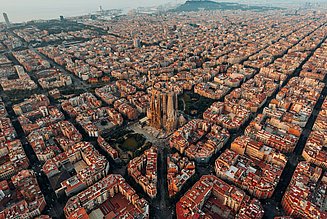
Barcelona combines Antoni Gaudí’s organic, unique buildings, such as the Sagrada Família and Park Güell, with one of Europe’s most influential urban development strategies. Particularly in the run-up to the 1992 Olympic Games, the city made strategic use of this major international event to fundamentally reorganise public space, coastal access and infrastructure: previously closed-off waterfront areas were opened up, new squares and promenades were created, and the city’s relationship with the sea was reimagined.
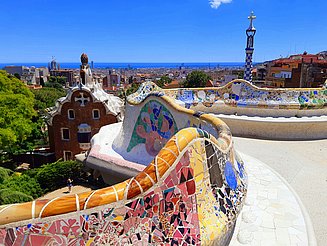
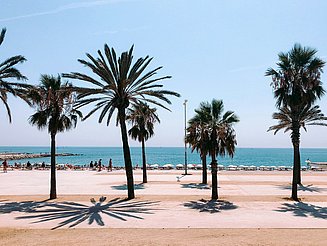
This approach, which has become known as the ‘Modelo Barcelona’, demonstrates how urban planning can have an impact beyond individual buildings, and is still discussed today in international urban studies as a benchmark example. For architects, Barcelona’s appeal lies precisely in this juxtaposition: Gaudí’s individual, almost inimitable design language on the one hand, and a strategically conceived urban policy spanning decades on the other.
What these cities have in common
Chicago, Rotterdam, Porto and Barcelona do not follow a single formula. Yet all four demonstrate that great architecture rarely emerges from nothing: it arises from a technical invention, a tradition of craftsmanship, a political decision or a steadfast commitment to renewal. For architects, the value of this insight lies not only in the individual building, but in understanding the conditions under which the city and architecture shape one another. Anyone who has visited these four cities has encountered four very different answers to the same question: how does a city come into being that one understands without having to explain it?


