Verner Panton at the MK&G: How the SPIEGEL Canteen Becomes an Exhibit
4 min read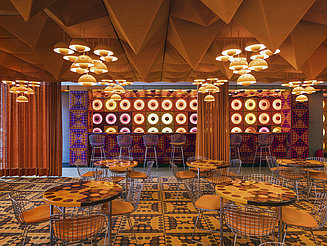
A Room within a Room
In 1969, Panton designed the canteen as part of an overall concept for the SPIEGEL high-rise, which the Hamburg architect Werner Kallmorgen had planned. Floor by floor, Panton developed a distinct colour scheme.
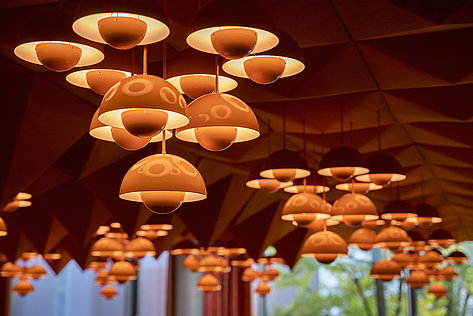
The canteen was not an afterthought but a counter-proposal. In the publisher's 1968 brief, the room was to be "serious and dignified". Panton responded with deep seating recesses, textile niches and a colour scheme of orange and red. You do not sit at a table here, you sink into it. Whoever speaks moves closer.
For more than four decades, people ate, smoked and argued about world politics in this room, while headlines were being written upstairs. The canteen was a microcosm of the public sphere of the Federal Republic, and at the same time a room that set itself against the supposed neutrality of postwar modernism.
From Meeting Place to Listed Monument
The canteen has been a listed monument since 2008.
When SPIEGEL moved to HafenCity in 2011, the MK&G took over the room, and it has been on display there since 2012. Today it is regarded as a rare example of a fully designed postwar interior that survives in its original state.
Yet this very act of preservation raises a question. The curator Dr. Stephanie Regenbrecht puts it this way: "You can still see the colour, but no longer what it did to people." The canteen can be viewed, but no longer entered.
The Start of a New Collection Display
The gallery is the first step in a long-term rearrangement of the Collection of Decorative Arts and Design.
It understands design not as a sequence of styles but as a social practice that shapes how we move, meet and talk to one another. The room is also designed as a place for conversations and workshops.
The question Regenbrecht ends on reaches beyond Panton: why has so much of what is designed today become so hesitant? Her answer is brief: rooms are never neutral.



What: Taking a Stand in Colour. From the SPIEGEL Canteen into the Collection
When: 4 December 2026 Hamburg,
Were: Museum für Kunst und Gewerbe Hamburg, Steintorplatz, 20099 Hamburg Germany
More information: www.mkg-hamburg.de


